
Reading “击壤歌” (Song of Beating the Ground)
A story of people and daylight
Work at sunrise and rest at sunset. People in the past arranged their day around daylight. Today, our lives have more schedules: work, time together, time alone, and rest. Palord asks: amid the busyness, do you also have a chance to notice how you are doing?
An ordinary meeting at the village edge
According to a legend recorded in the “Exaggerations in Literary Praise” chapter of Lunheng, a man was playing a ground-beating game during the time of Yao. When a bystander praised Yao's achievements, the man spoke instead of his own daily life.
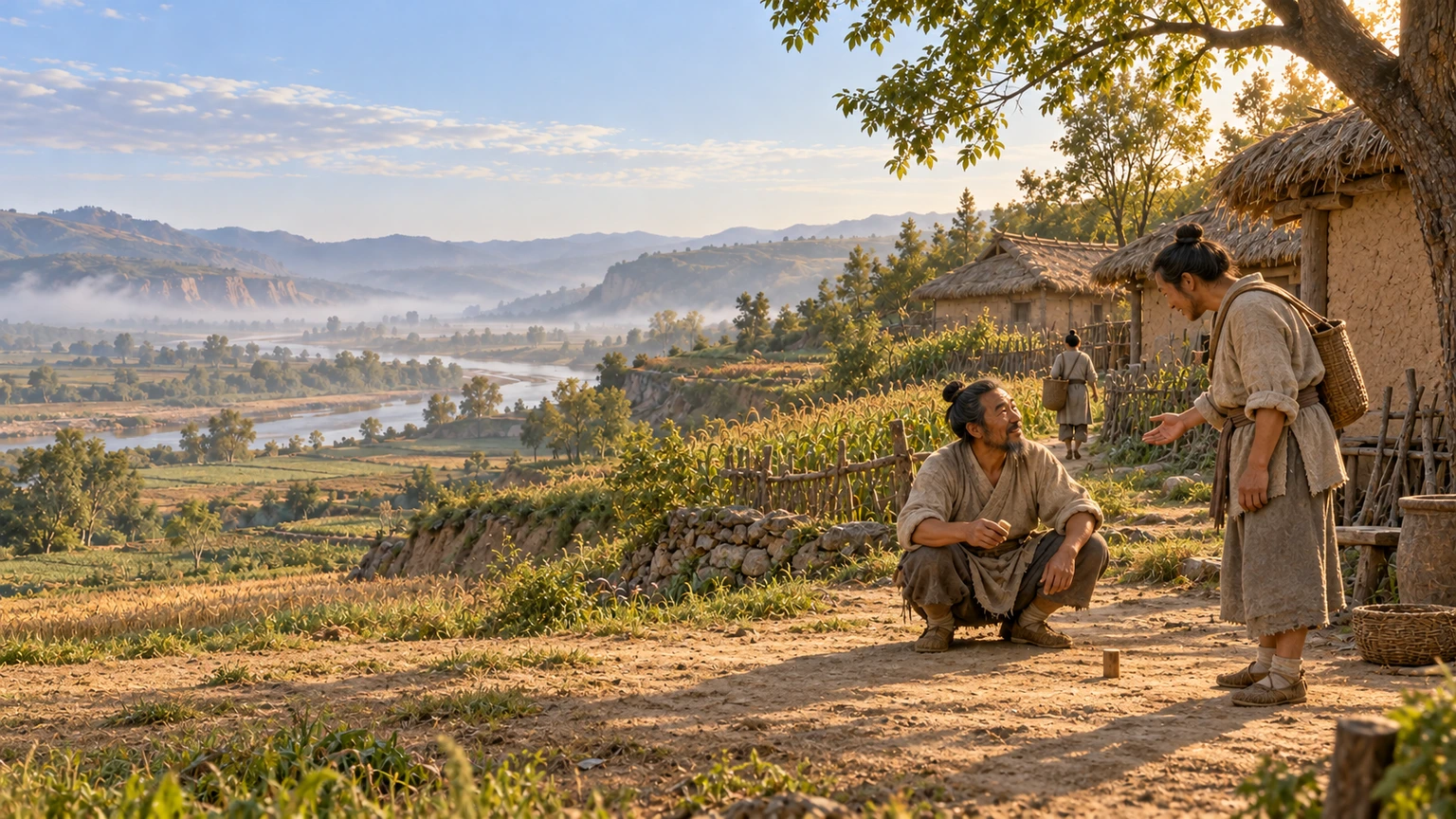
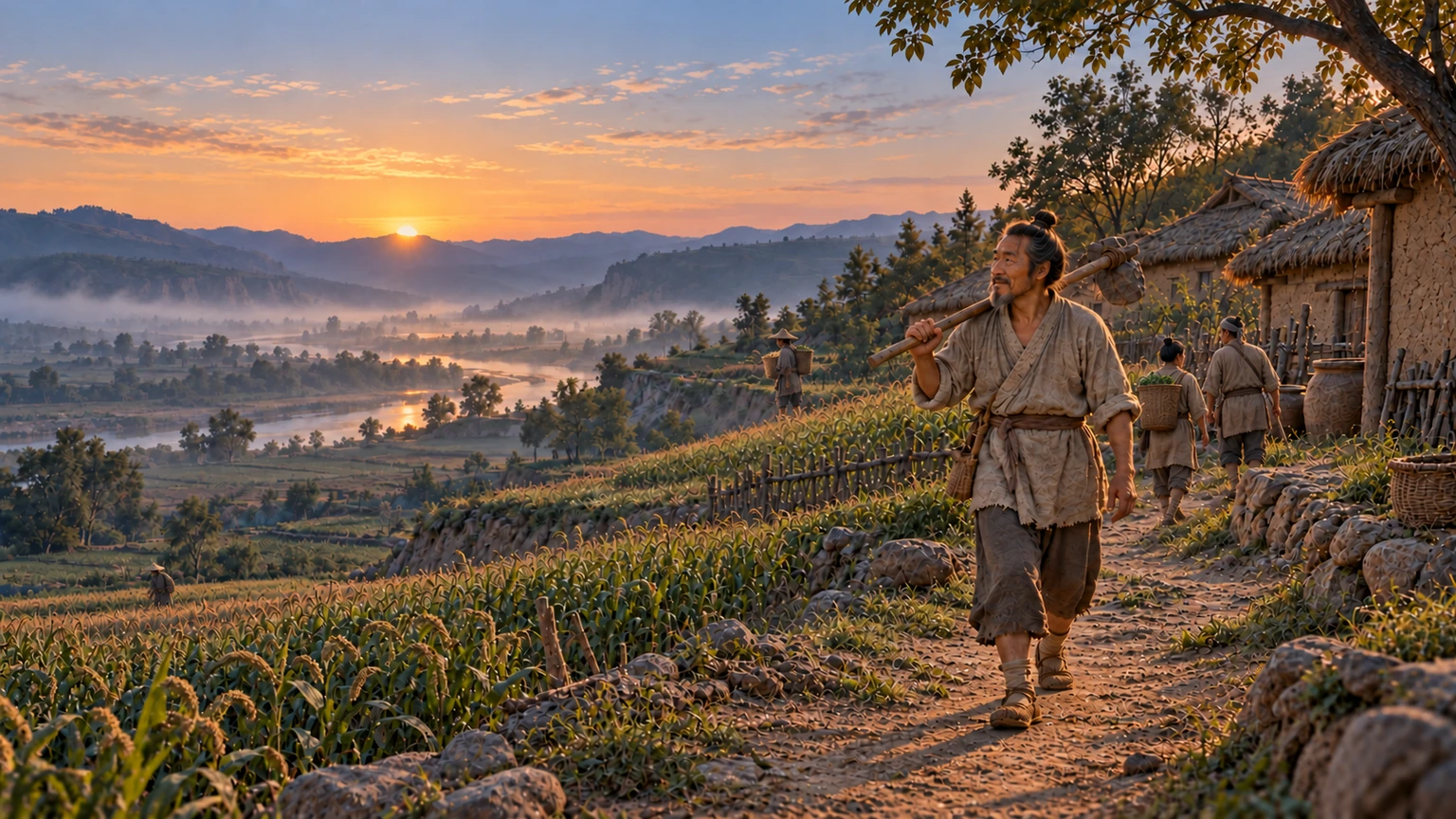
Work at sunrise
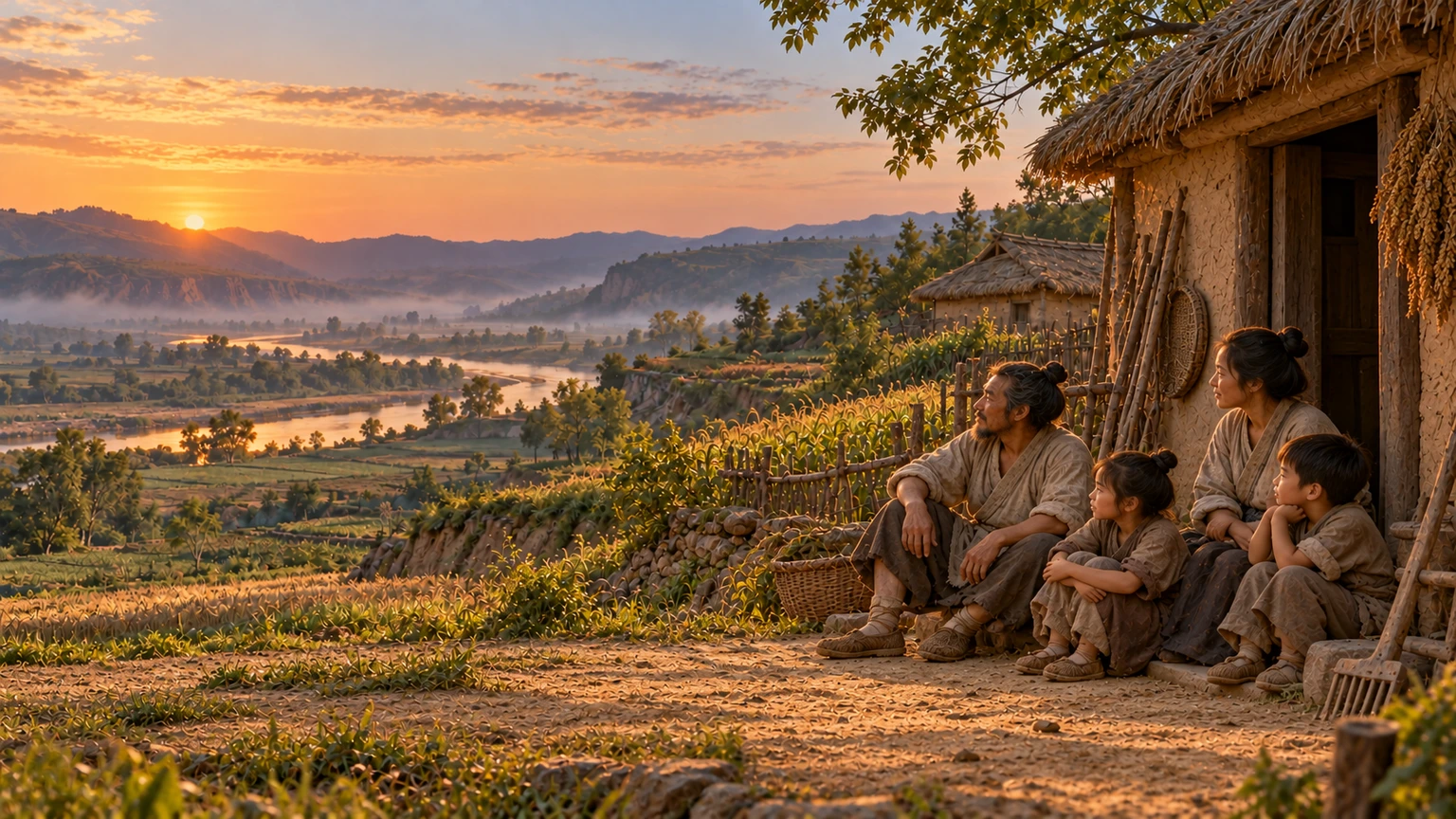
Daylight reaches the village, and people head to the fields to work. Their day begins with the land before them and the light of the sun.
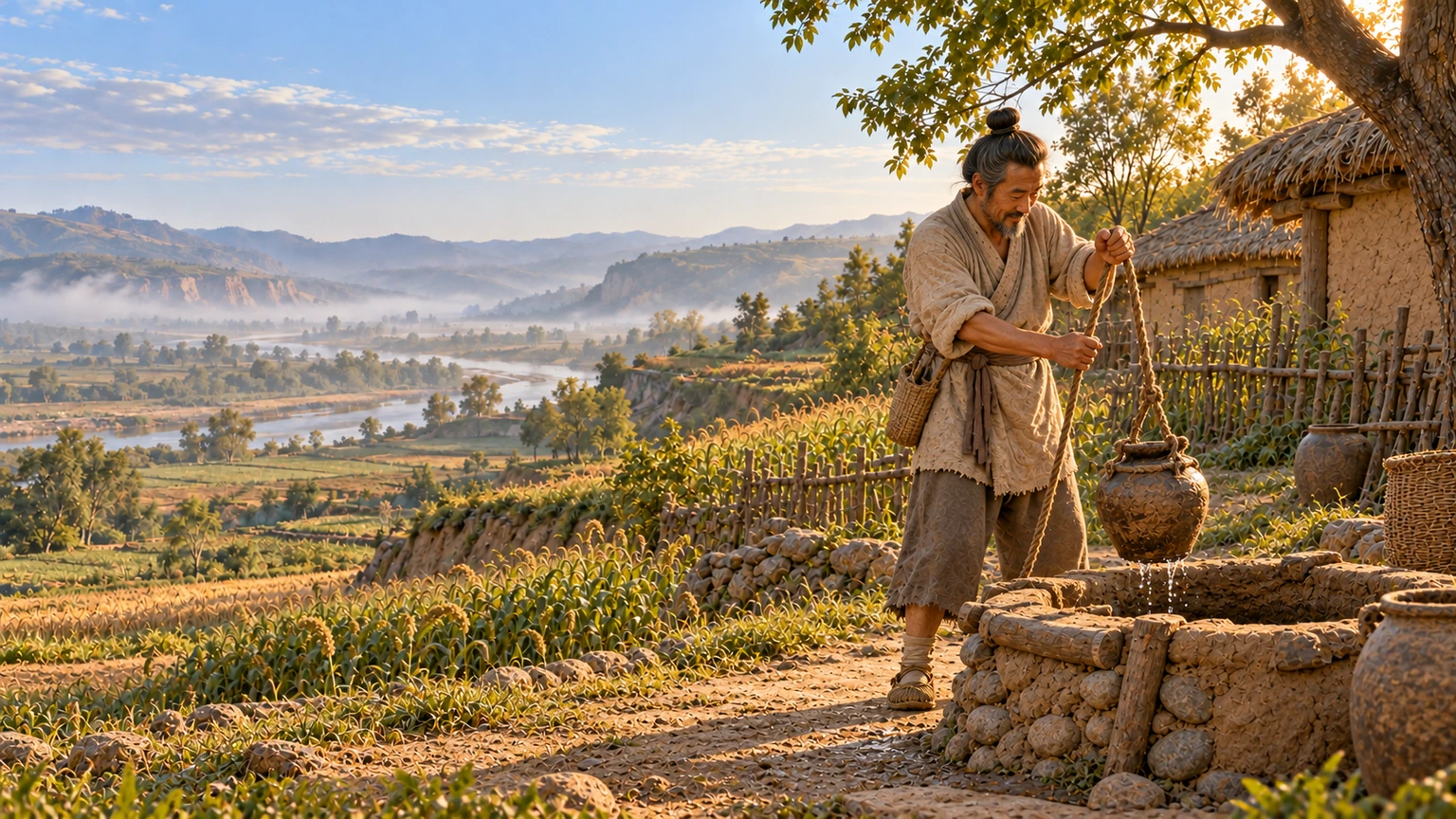
Dig a well to drink
Clear water is drawn from the well and poured into a simple clay jar. Drinking water comes from one's own work, giving everyday life a dependable foundation.
Farm the land to eat
Work in the fields provides the food on the table. Harvest and eating are connected, bringing the human day back to the rhythms of the land.
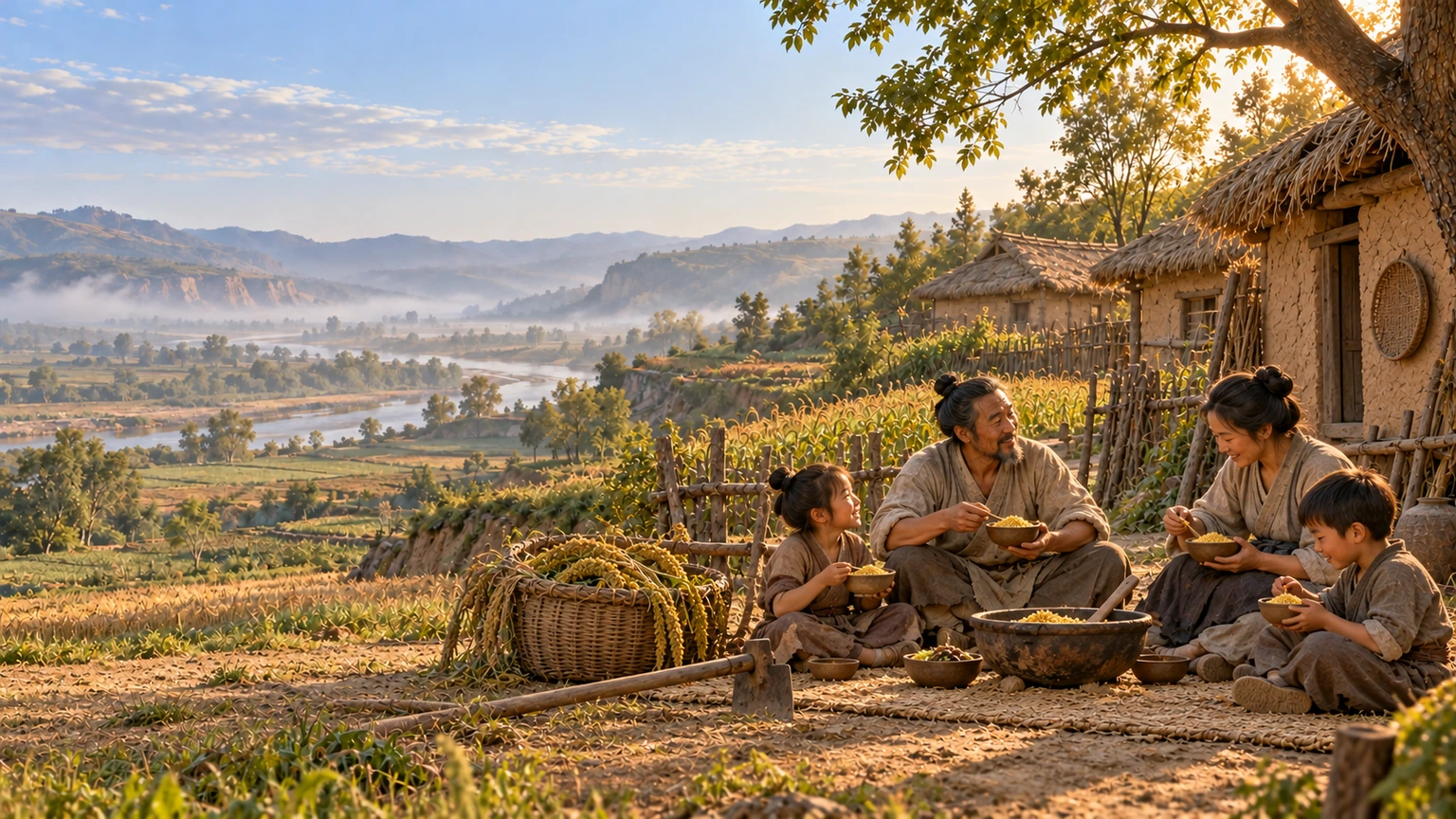
Rest at sunset
The sun sinks behind the hills, and those who have worked return home. Rest a while, sit with family, and let the day close in quiet.
Excerpt from the original text of Lunheng, “Exaggerations in Literary Praise,” by Wang Chong of the Han dynasty
The Analects says: “Great indeed was Yao as a ruler! So vast was he that the people could not name his virtue!” A traditional account says: “A fifty-year-old man was playing a ground-beating game by the road. An observer said, ‘Great indeed is Yao's virtue!’ The player replied, ‘I work at sunrise and rest at sunset; I dig a well to drink and farm the land to eat. What power has Yao over this?’”
This account is offered as proof that Yao was “so vast that none could name his virtue.” To call him “vast” is acceptable; to go on to say that “the people could not name it” is an exaggeration. Across so great a land and so many people, it is hardly credible that none could describe Yao's virtue. The ground-beating player's words, “What power has Yao over this?”, are used to suggest that the people “could not name it.” Yet the observer said, “Great indeed is Yao's virtue!” Even an ordinary person such as this could recognize it. There were in fact people who knew it, so to say there were “none” is, after all, an exaggeration.